Your cart is currently empty.
Skip to product information
 Open media 1 in gallery view
 Open media 2 in gallery view
 Open media 3 in gallery view
 Open media 4 in gallery view
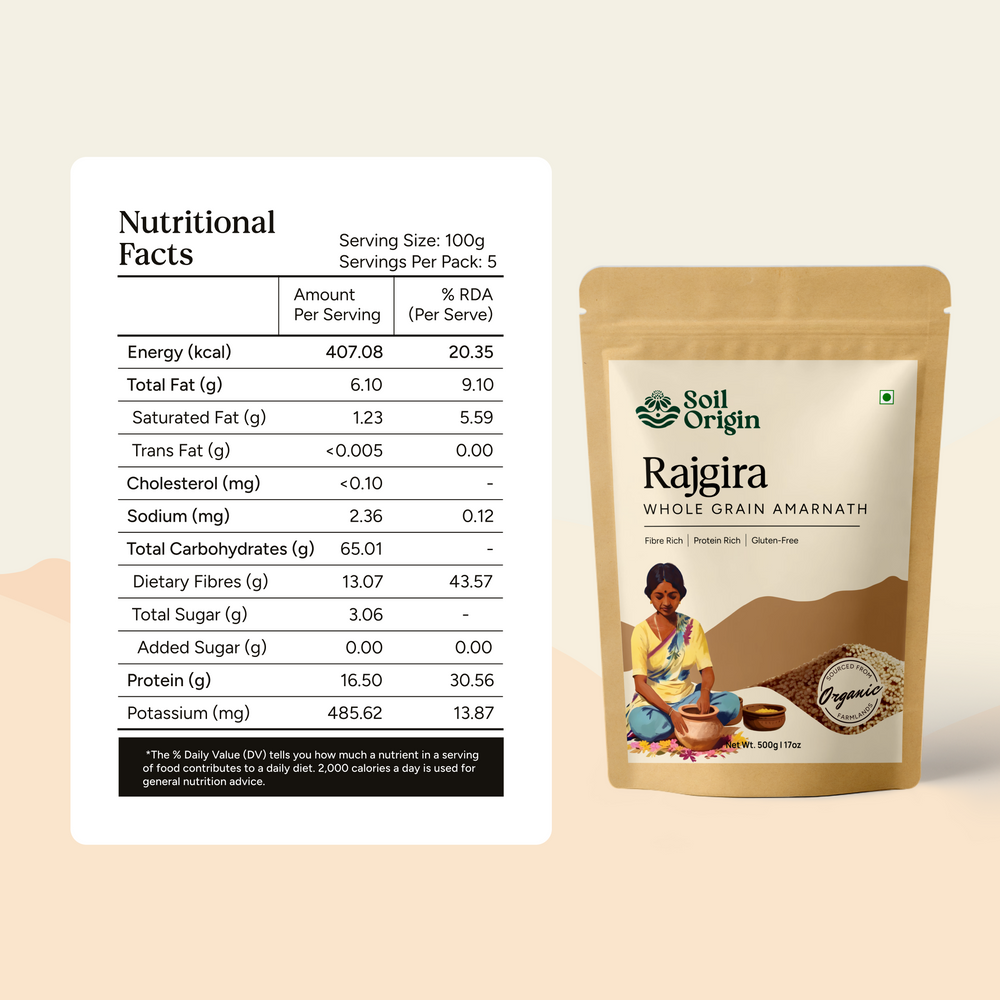 Open media 5 in gallery view
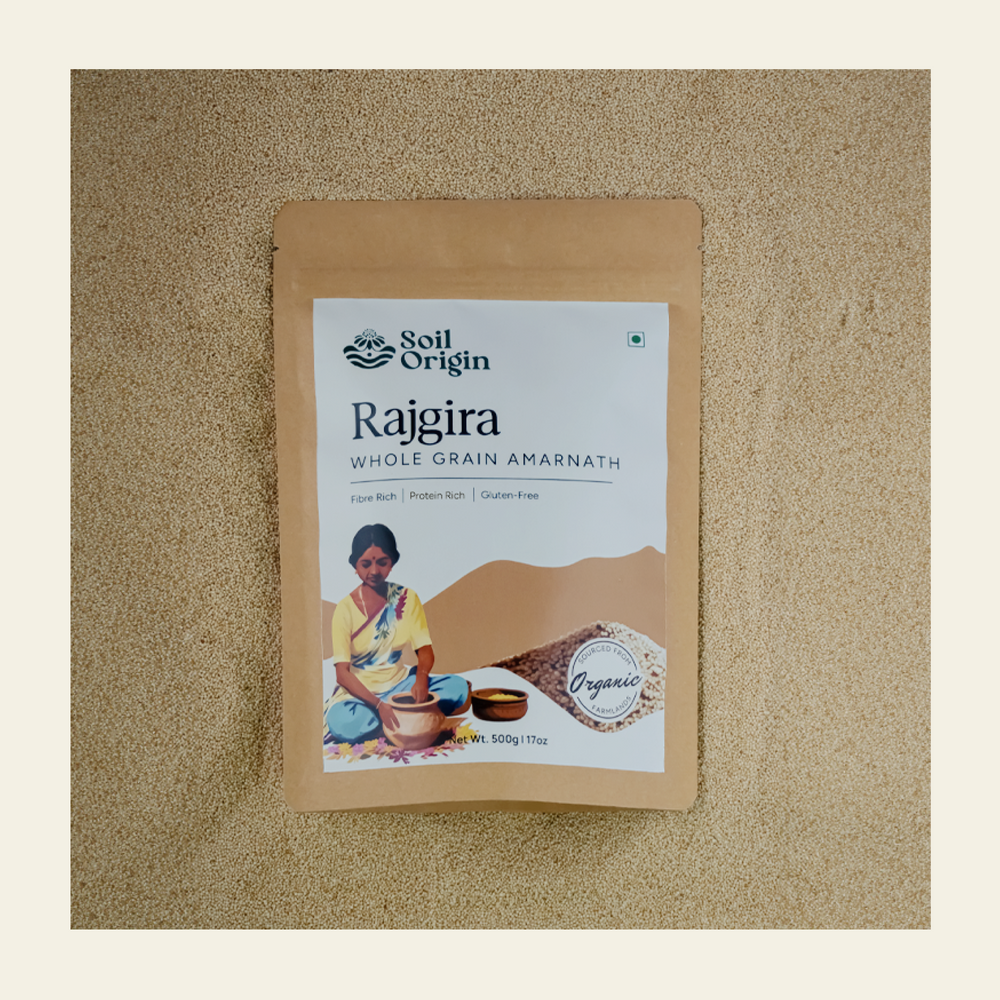 Open media 6 in gallery view
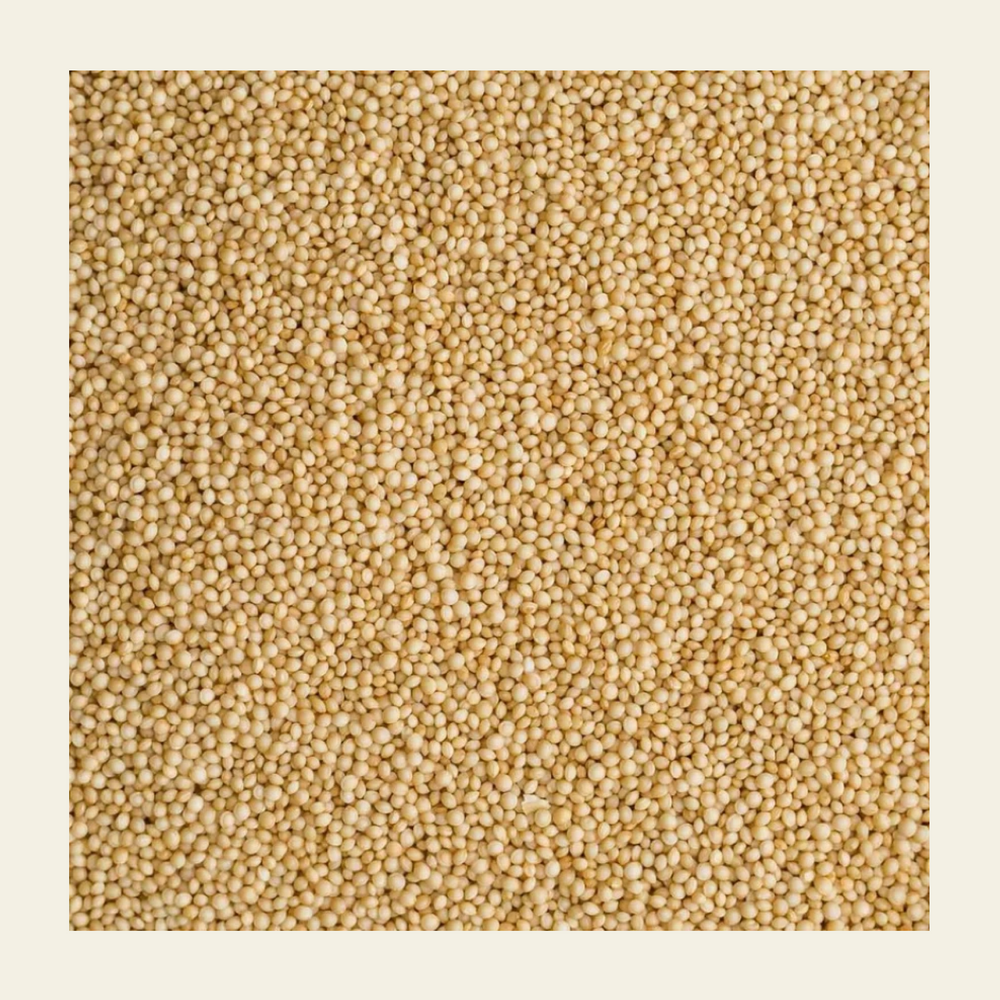 Open media 7 in gallery view


 Open media 1 in gallery view
 Open media 2 in gallery view
 Open media 3 in gallery view
 Open media 4 in gallery view
 Open media 5 in gallery view
 Open media 6 in gallery view
 Open media 7 in gallery view


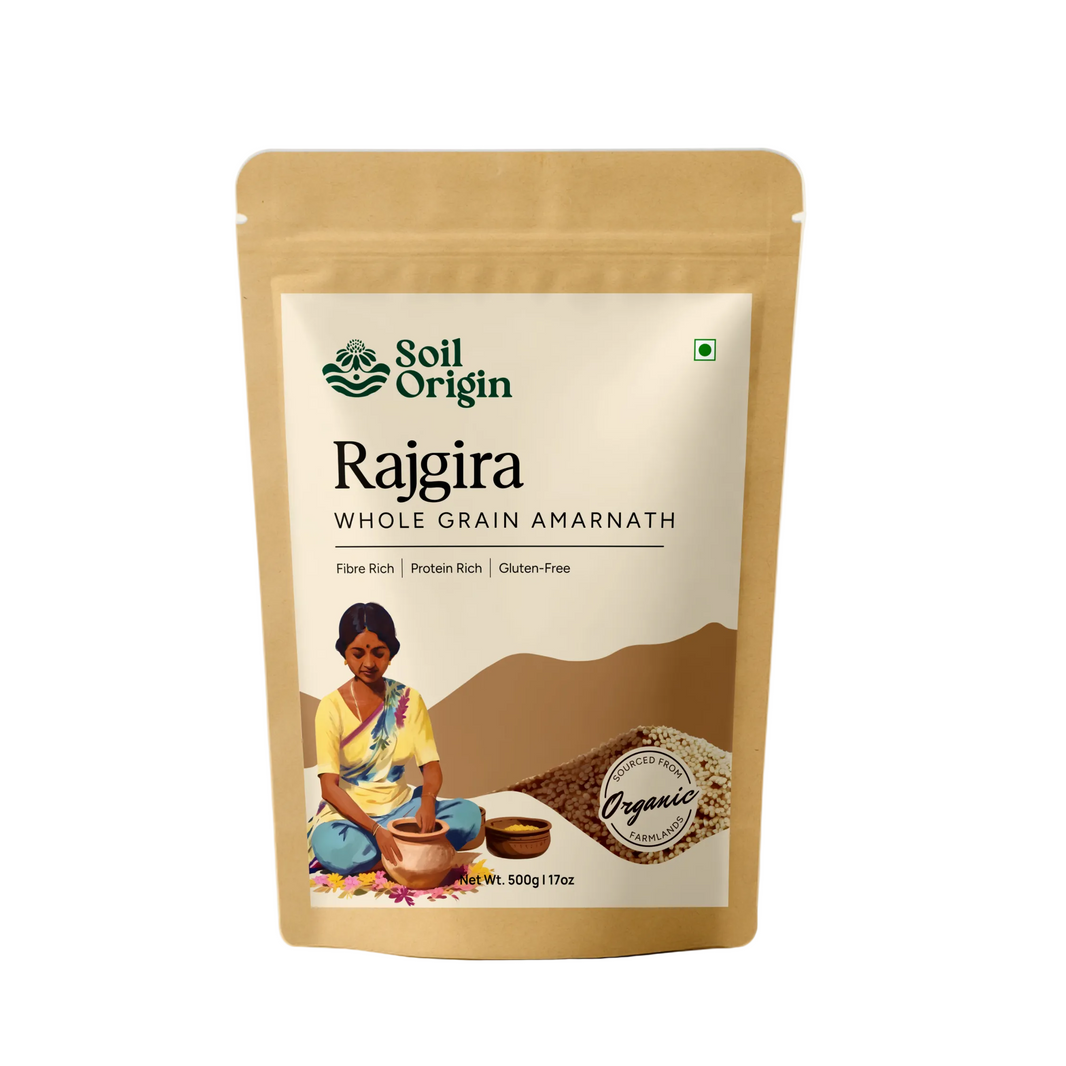
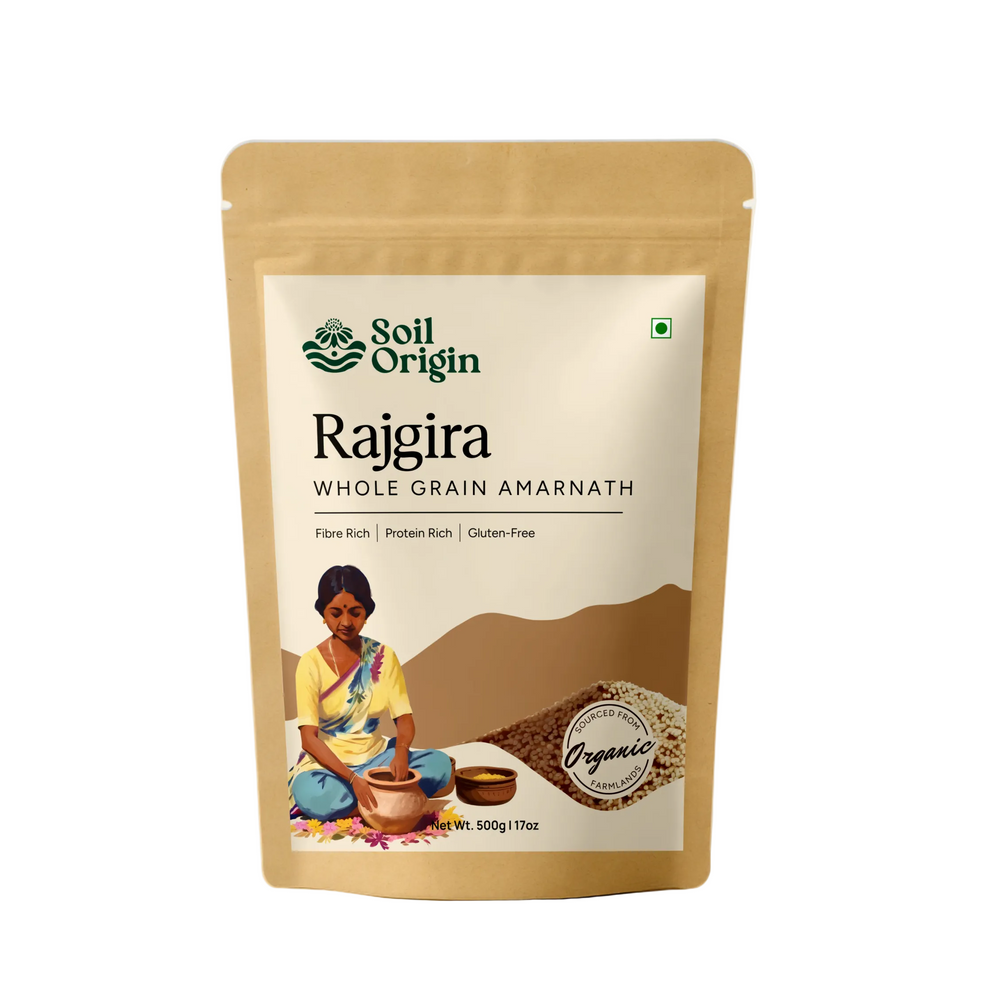
Rajgira (Amaranth) - Whole Grain | Pack of 2 | Soil Origin
Vendor:Soil Origin
Sale price
Rs. 360
Off
Regular price
Rs. 440
Add to wishlist
 Get it between -
Description
Description
- Description
- Additional info
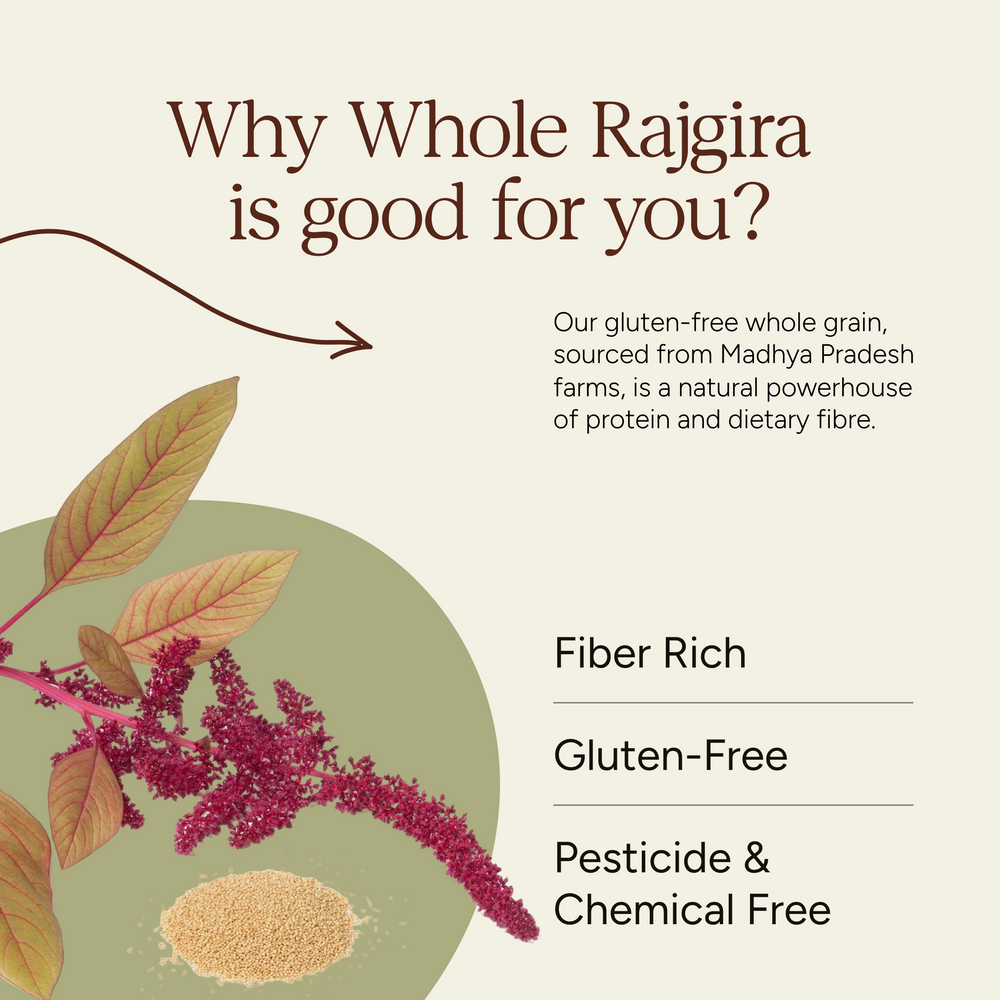
- Whole seed: uncracked amaranth, not flour.
- Ancient grain: long grown and eaten across India.
- Distinct texture: cooks soft with a faint crunch that stays.
- Fasting-friendly: traditionally eaten during vrat days.
- Madhya Pradesh farms: sourced from growers in the state.
- Pack: 2 units
- Type: whole amaranth grain
- Origin: Madhya Pradesh
- Storage: airtight container in a cool, dry place
Whole rajgira, or amaranth, grown in Madhya Pradesh — tiny pale seeds with a nutty taste and a slightly crunchy bite when cooked. It is a familiar vrat grain in Indian kitchens, popped for laddoos or simmered into porridge. Sold as a pack of two.
Key Features
Ingredients
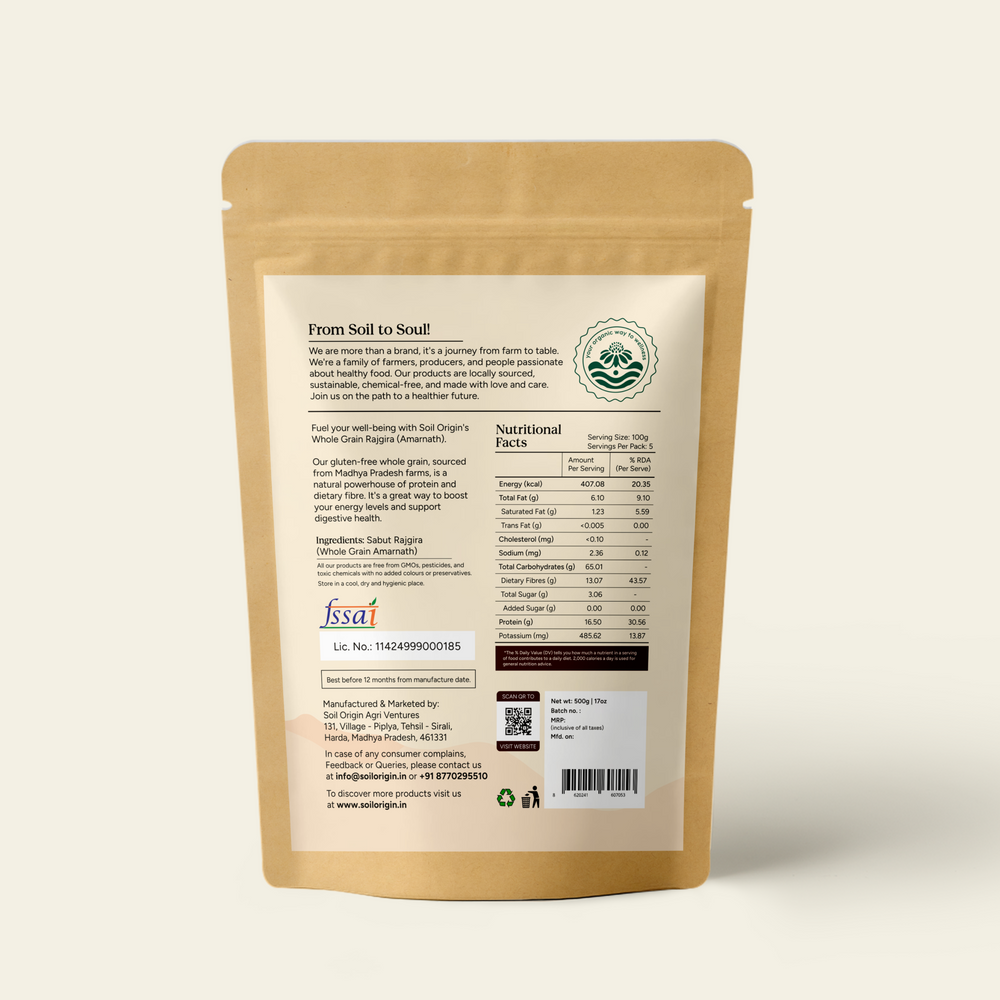
Whole rajgira (amaranth) seed.
How to Use
For porridge, simmer one part rajgira in three parts water or plant-based milk for about 20 minutes. To pop it, sprinkle a small handful into a very hot dry pan and shake constantly — it puffs in seconds and is then ready for laddoos or chikki. It can also be added to soups and khichdi for texture.
Product Details
Good to Know
The seeds are very small and will slip through a coarse sieve, so rinse in a fine-mesh strainer. When popping, work in tiny batches — an overloaded pan gives you burnt seeds rather than puffs. Cooked amaranth thickens quickly as it cools.
FAQs
How is this different from rajgira flour?
This is the whole seed, so you can pop it, cook it as porridge or grind your own flour. Ready-made flour is only good for rotis and bakes.
Why won't my seeds pop?
The pan is probably not hot enough. It needs to be genuinely smoking hot, with only a pinch of grain at a time.
Is it suitable for vrat?
Rajgira is traditionally eaten during fasting days in many Indian households.
How much rajgira do I get in the Soil Origin pack of 2?
The listing sells whole rajgira as a pack of two units for ₹360. The maker does not state the weight per unit on the listing, so check the pack label for the exact net quantity.
Is Soil Origin rajgira suitable for a gluten-free diet?
Rajgira, or amaranth, is a seed rather than a wheat grain, and the only ingredient is whole rajgira seed. The listing does not state a gluten-free certification, so anyone with coeliac disease should check the pack label.
How should I store whole rajgira and how long does it keep?
Keep the seeds in an airtight container in a cool, dry place. The maker does not state a shelf life on the listing, so go by the best-before date printed on the pack.
Can I make rajgira laddoos and chikki with this pack?
Yes. Pop a small handful at a time in a very hot dry pan, shaking constantly, and the puffed rajgira is ready for laddoos or chikki. It also cooks into porridge in about 20 minutes with three parts water.
Who sells the rajgira on EarthBased and how is it delivered?
It is sold by Soil Origin and fulfilled by EarthBased, which ships within India only, typically 3 to 5 business days after dispatch. Food items follow the Refund Policy for returns.
Country of Origin: India Sold by: Soil Origin Fulfilled by: EarthBased
1,600+ Plant Based and Cruelty Free Products | Sustainable and Ethical Living1,600+ Plant Based and Cruelty Free Products | Sustainable and Ethical Living1,600+ Plant Based and Cruelty Free Products | Sustainable and Ethical Living1,600+ Plant Based and Cruelty Free Products | Sustainable and Ethical Living1,600+ Plant Based and Cruelty Free Products | Sustainable and Ethical Living1,600+ Plant Based and Cruelty Free Products | Sustainable and Ethical Living1,600+ Plant Based and Cruelty Free Products | Sustainable and Ethical Living1,600+ Plant Based and Cruelty Free Products | Sustainable and Ethical Living1,600+ Plant Based and Cruelty Free Products | Sustainable and Ethical Living1,600+ Plant Based and Cruelty Free Products | Sustainable and Ethical Living1,600+ Plant Based and Cruelty Free Products | Sustainable and Ethical Living1,600+ Plant Based and Cruelty Free Products | Sustainable and Ethical Living1,600+ Plant Based and Cruelty Free Products | Sustainable and Ethical Living1,600+ Plant Based and Cruelty Free Products | Sustainable and Ethical Living1,600+ Plant Based and Cruelty Free Products | Sustainable and Ethical Living1,600+ Plant Based and Cruelty Free Products | Sustainable and Ethical Living1,600+ Plant Based and Cruelty Free Products | Sustainable and Ethical Living1,600+ Plant Based and Cruelty Free Products | Sustainable and Ethical Living1,600+ Plant Based and Cruelty Free Products | Sustainable and Ethical Living1,600+ Plant Based and Cruelty Free Products | Sustainable and Ethical Living1,600+ Plant Based and Cruelty Free Products | Sustainable and Ethical Living1,600+ Plant Based and Cruelty Free Products | Sustainable and Ethical Living1,600+ Plant Based and Cruelty Free Products | Sustainable and Ethical Living1,600+ Plant Based and Cruelty Free Products | Sustainable and Ethical Living1,600+ Plant Based and Cruelty Free Products | Sustainable and Ethical Living1,600+ Plant Based and Cruelty Free Products | Sustainable and Ethical Living1,600+ Plant Based and Cruelty Free Products | Sustainable and Ethical Living1,600+ Plant Based and Cruelty Free Products | Sustainable and Ethical Living1,600+ Plant Based and Cruelty Free Products | Sustainable and Ethical Living1,600+ Plant Based and Cruelty Free Products | Sustainable and Ethical Living